Obrabot — internal voice AI analytics cabinet at Prof-IT
I run it as the PM: a personal cabinet with analytics and dashboards for the group's voice AI agents.
- Product
- Voice AI
- B2B
- Analytics
Obrabot: internal voice AI analytics cabinet
Obrabot is an internal product at the Prof-IT group. It’s a personal cabinet where customers and operators see what voice AI agents actually do: what they talk about, where the script breaks, and which calls need a human in the loop.
I run the product: shape the requirements, prioritize the backlog, align UX and data model with the team and engineers.
The class of problem
A voice AI agent without the right dashboard is a black box. The team can’t see:
- which segments of calls go off-script;
- where the AI agent performs worse than a human and why;
- which specific calls a person actually needs to listen to;
- how the conversation metric shifts from iteration to iteration.
Without this layer the product sells worse, because the customer doesn’t trust what they can’t verify.
What’s inside
- AI call segmentation. Calls are automatically tagged by outcome, refusals, tone, and unusual behavior.
- Dashboards by agent and script. Prompt version comparisons, scenario A/B, daily and per-campaign trends.
- Drill-down to a specific call. Transcript, tags, audio, and metadata, all on one screen.
- Early signals. Surfacing dialogs where a human should step in before the customer complains.
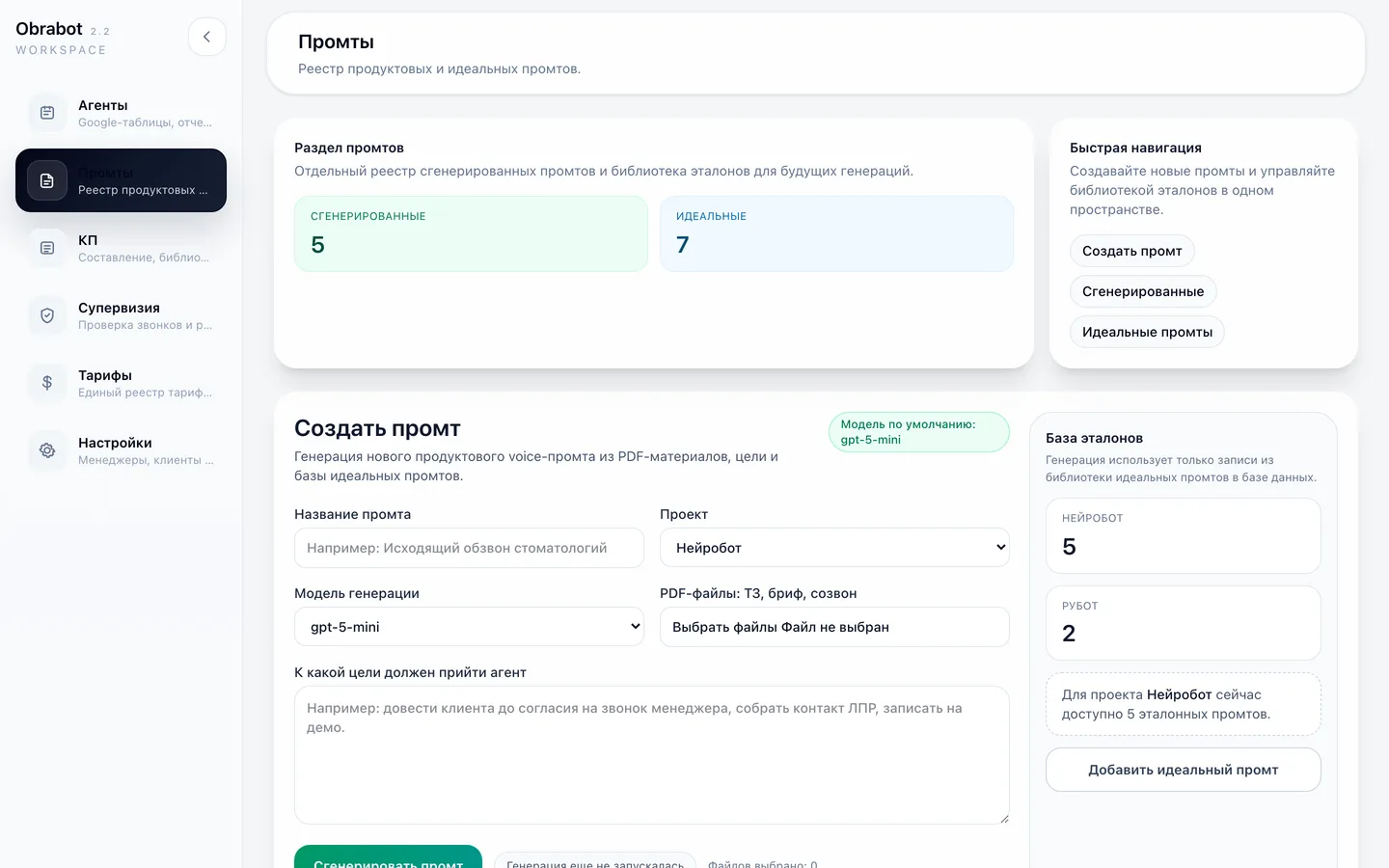
- Prompt generation from client material. A registry of product prompts and a library of vetted references: the system assembles a new voice prompt out of the brief, the spec, and a call transcript.
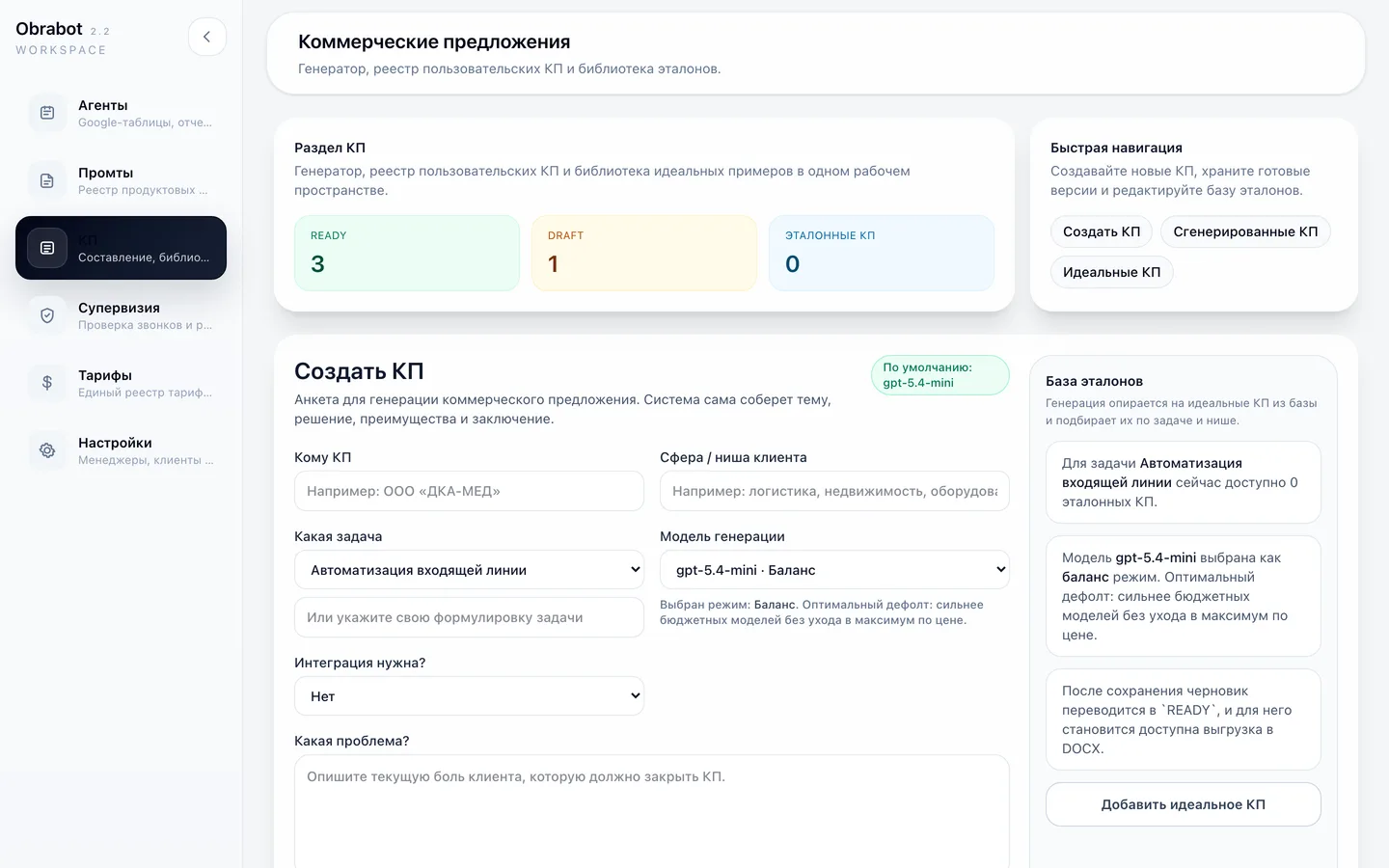
- Commercial proposal assembly. A short form describing the task, the niche and the integration, from which a proposal is generated with development cost and a per-second rate.
Stack
Next.js, TypeScript, Prisma + PostgreSQL, OpenAI API, integrations with Prof-IT infrastructure.
I’m not an “external AI consultant” talking about voice AI’s potential. I own an actual product inside the Prof-IT group, where voice AI is the main product line, not a pilot. That means real operational pain, real customers, NDA on the numbers, and accountability for outcomes.
The screenshots above come from the live cabinet on demo data. Real customers, their prompts and the numbers stay under NDA; happy to discuss details in a private conversation.